 VapeWholesaleHub
Understanding Nicotine Manufacturing From the Inside — Three Price Tiers
If you are comparing nicotine suppliers right now, you are probably looking at three quotes that look identical and cost very different amounts. That gap usually comes down to cell grade, coil consistency and how honest the factory is about tolerances. Let us unpack it.
Modelling a Healthy Margin
Tiered pricing works best when the tiers match real customer behaviour. Most nicotine buyers will take the second tier if the step is modest and the third tier only if they can see a genuine reason to hold more stock.
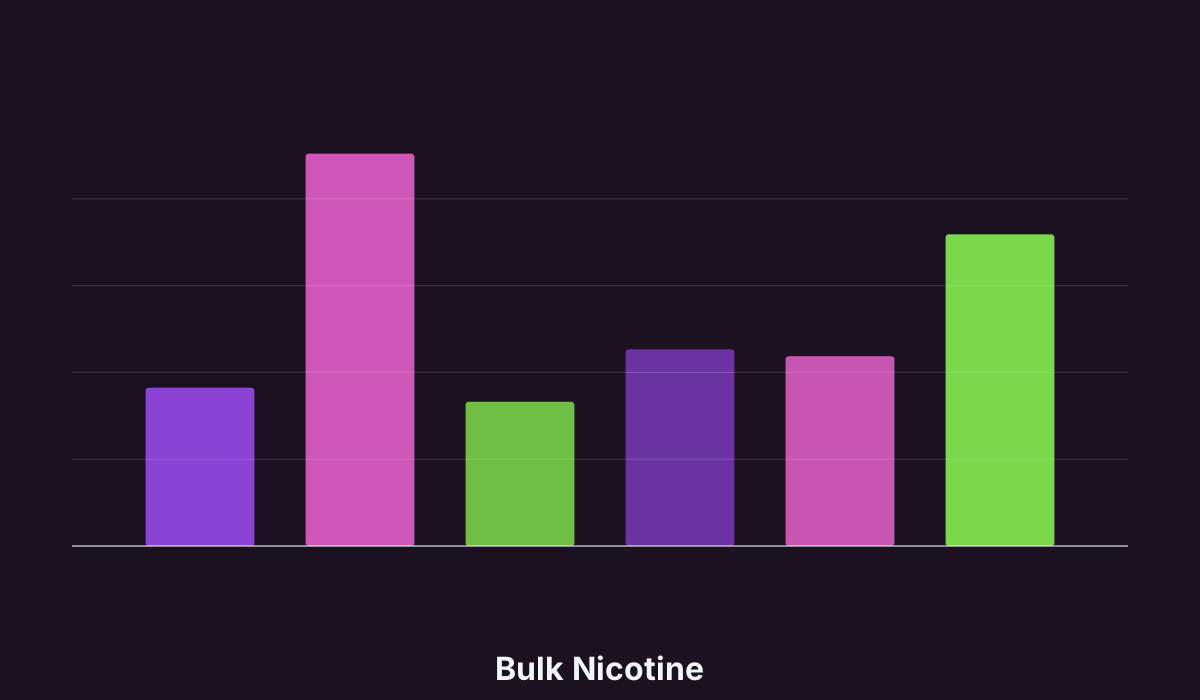
Indicative reference points for planning purposes: entry tier from USD 1.01 per unit at 1000 units, mid tier at USD 1.36, and volume tier at USD 1.10 for full container quantities. These figures move with specification, packaging and freight, so treat them as a shape rather than a quote.
Selling Nicotine at Store Level
Online, shoot nicotine at a consistent scale across the range. Customers compare by eye, and inconsistent product photography creates returns that have nothing to do with the product.
Online, shoot nicotine at a consistent scale across the range. Customers compare by eye, and inconsistent product photography creates returns that have nothing to do with the product.
Market Signals
Retailers report that nicotine customers are asking more specific questions than they did two years ago. That favours ranges with clear, simple information over ranges with clever marketing.
One visible change in nicotine is the move towards clearer labelling and traceability. Retailers who adopted batch coding early are finding it much easier to work with larger distributors now.
The Specification That Matters
Ask for the nicotine specification in the same units you intend to measure in. A metric quoted in a form you cannot verify on arrival is not a specification, it is a claim.
| Product category | Closed pod |
|---|---|
| Resistance band | 1.2 - 1.4 ohm |
| Capacity tolerance | +/- 3% |
| Puff count method | Declared by capacity |
| Master carton | 100 units |
| Carton weight | 11.7 kg |
| Shelf life | 24 months |
| Storage | 15-25 C, dry, away from direct light |
Logistics That Protect Margin
Carton dimensions for nicotine are a design decision, not a packing afterthought. A few centimetres on the master carton can change how many units fit a pallet, and that repeats on every order.
Air freight makes sense for a first nicotine order when you need to test demand quickly, but almost every steady programme moves to sea freight once volumes stabilise. Planning that switch early avoids a painful margin squeeze later.

Practical Checklist
- Rotate stock by batch code rather than by delivery date.
- Plan the switch from air to sea freight before you need it.
- Model landed cost, not ex-works price, when comparing quotes.
- Keep sealed retained samples from every production batch.
- Confirm the current customs classification with your own broker.
- Write the complaint threshold into the order terms.
Frequently Asked Questions
What information do you need to quote?
Target specification, approximate quantity, destination and any packaging requirement. With those four we can usually come back with a costed option the same working day rather than a request for more information.
What if a batch does not match the sample?
Keep the retained samples from the approval stage. If a delivered batch measurably differs, we compare against the retained set and resolve it against the production record. This is why we insist on sealed retained units from every run.
Do you hold stock for regular customers?
For established programmes we can reserve production slots and, in some cases, hold finished nicotine stock against a forecast. It removes most of the lead time risk from a reorder and is worth discussing once volumes are stable.
Do you provide compliance documents?
Every shipment leaves with the documentation set relevant to your market, including batch records and test reports where required. Your local rules still determine what you must file, so confirm those with your broker before import.
Next Step
Whatever you decide, decide it against numbers you can check on arrival. That single discipline removes most of the risk from importing nicotine.
Related Reading
- Certification Routes for Nicotine in Different Markets — Wholesale Clubs
- Nicotine Compliance Basics for Importers — Landed Cost Worked Through
- Warehouse Layout Tips for Nicotine Distributors — Before Your Next Order
- Nicotine Insurance Valuation for Held Stock — Retail Chains
- Nicotine Cash Flow Planning for Large Buys — Before Your Next Order
- Nicotine Artwork and Dieline Essentials — Container-Scale Orders