 VapeWholesaleHub
Reducing Returns on Nicotine Through Better Specs — Online Sellers
A nicotine programme fails in predictable ways: a specification nobody wrote down, a sample nobody retained, and a lead time nobody stress tested. Here is how to close those three gaps before they cost you a container.
How Nicotine Batches Are Checked
Train whoever receives nicotine cartons to note anything unusual at the point of unloading. Damage discovered at the dock is a freight claim; damage discovered a week later is your problem.
Incoming inspection for nicotine is not about opening boxes at random. We weigh a sample of cartons, check batch codes against the production record, run a draw resistance measurement, and log the results so that a complaint three months later can be traced to a specific run.
- Model landed cost, not ex-works price, when comparing quotes.
- Agree the tolerance band in writing before approving artwork.
- Keep sealed retained samples from every production batch.
- Check carton dimensions against your freight quote before confirming.
- Confirm the current customs classification with your own broker.
Where Demand Is Heading
Demand for nicotine has been steadily rebalancing. The early phase rewarded whoever could ship fastest; the current phase rewards whoever can ship the same thing twice. That shift favours buyers who invest in specification rather than price shopping.
One shift worth planning for: shorter nicotine reorder cycles with smaller average drops. It favours suppliers with flexible production slots over those who only want large annual commitments.
Pricing and Margin
The cheapest nicotine quote is rarely the cheapest outcome. Add freight, defect handling, delay risk and the staff time spent chasing, then compare again. The ranking often changes.
Hold a small nicotine buffer in your pricing model for currency movement. A few percent on a container is a real number, and it is easier to plan for than to absorb.
Indicative reference points for planning purposes: entry tier from USD 1.92 per unit at 1000 units, mid tier at USD 1.00, and volume tier at USD 0.62 for full container quantities. These figures move with specification, packaging and freight, so treat them as a shape rather than a quote.
Positioning Nicotine on Your Shelf
A tight nicotine range with deep availability usually outsells a wide range with thin stock. Customers who find their line in stock come back; customers who are told to wait do not.
A tight nicotine range with deep availability usually outsells a wide range with thin stock. Customers who find their line in stock come back; customers who are told to wait do not.
What to Fix Before Approving Nicotine
When we write a nicotine specification with a distributor, we fix four things first: the resistance band, the liquid capacity tolerance, the puff count methodology and the packaging master carton. Everything else can flex without changing the customer experience.
| Product category | Refillable kit |
|---|---|
| Resistance band | 1.2 - 1.4 ohm |
| Capacity tolerance | +/- 5% |
| Puff count method | Machine cycle 2s on / 18s off |
| Master carton | 240 units |
| Carton weight | 10.8 kg |
| Shelf life | 24 months |
| Storage | 15-25 C, dry, away from direct light |
Getting Nicotine to Your Warehouse
Consolidating nicotine with other lines is often the biggest single saving available to a mid size importer. The unit cost does not change but the landed cost does, sometimes materially.
Track nicotine landed cost per unit as a running number, including duty and local delivery. It is the only figure that tells you whether a supplier change actually improved anything.
Practical Checklist
- Start with a mixed carton and let your own sell-through decide.
- Model landed cost, not ex-works price, when comparing quotes.
- Write the complaint threshold into the order terms.
- Check carton dimensions against your freight quote before confirming.
- Keep sealed retained samples from every production batch.
- Agree the tolerance band in writing before approving artwork.
Frequently Asked Questions
What if a batch does not match the sample?
Keep the retained samples from the approval stage. If a delivered batch measurably differs, we compare against the retained set and resolve it against the production record. This is why we insist on sealed retained units from every run.
Can you match an existing product I already sell?
Often yes, provided we can measure it properly. Send a physical sample and we will report back on what can be matched, what will differ slightly, and why. An honest gap is more useful than a vague promise.
Can I mix strengths in one order?
In most cases yes, as long as each strength meets the minimum run length. Mixed strength cartons are popular with retailers building their first display because they show the full ladder without over committing.
What information do you need to quote?
Target specification, approximate quantity, destination and any packaging requirement. With those four we can usually come back with a costed option the same working day rather than a request for more information.
How long does a nicotine order take to arrive?
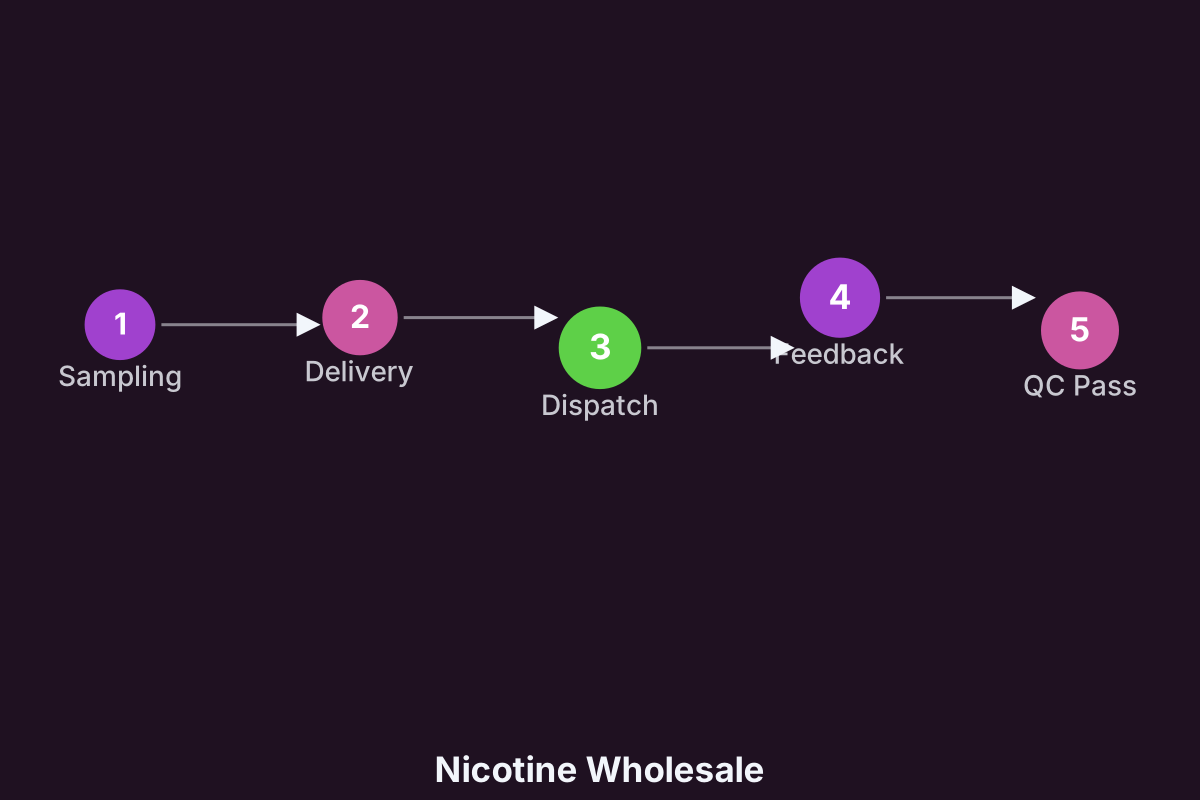
Production typically takes ten to eighteen working days after artwork approval, and transit depends on the method you choose. Air express is fastest, sea freight is cheapest at volume. We confirm both at quotation so there is no surprise later.
Next Step
Questions that are not answered here are usually the interesting ones. Reach out with the specifics of your market and we will answer with numbers rather than adjectives.
Related Reading
- Nicotine Warranty and After Sales: Setting Expectations — a Factory Floor View
- Nicotine Component Sourcing Behind the Finished Unit — North America
- Testing Nicotine Consistency Across Three Batches — Three Price Tiers
- Nicotine vs Standard Alternatives: What Changes for Your Shelf — Regional Distributors
- Nicotine Temperature Exposure During Transit — 2026 Edition
- Nicotine KPI Set for Wholesale Operations — Established Chains