 VapeWholesaleHub
Nicotine When to Add a Second Factory — Freight Included
Retailers rarely lose money on nicotine because of price. They lose money because the first container was bought on a photograph. This page walks through what actually matters when you source nicotine at scale, written from the buying desk rather than the marketing department.
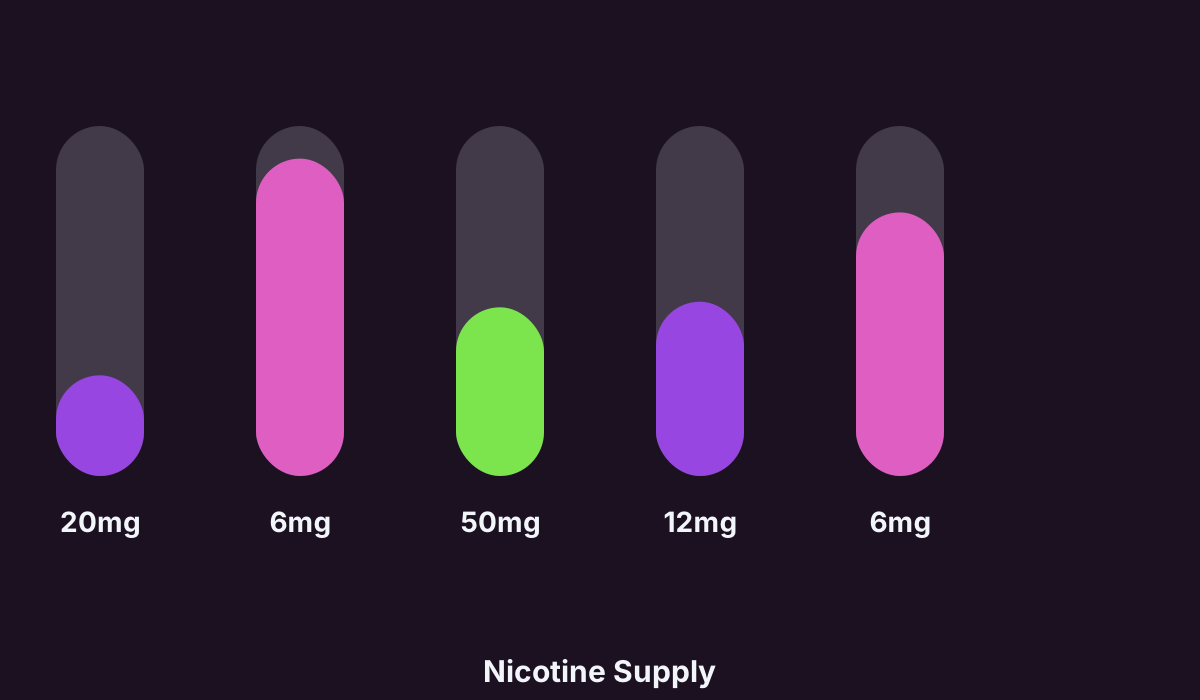
Where Nicotine Sits in the Range
Category planning for nicotine works best when you map it against three shopper types: the restocker who already knows what they want, the switcher who wants something stronger, and the explorer who buys on flavour name alone.
Range decisions for nicotine should start from shelf space, not from a supplier catalogue. Count the facings you actually have, then decide how many of them this line deserves against what it currently earns.
The Specification That Matters
Good nicotine specs describe the failure boundaries, not just the target. Stating what is unacceptable gives the factory a clear production window instead of a single point they will miss half the time.
Where possible, tie part of the nicotine payment to inspection against the written spec. It focuses attention on the numbers rather than on the relationship.
| Product category | Closed pod |
|---|---|
| Resistance band | 0.6 - 0.8 ohm |
| Capacity tolerance | +/- 2% |
| Puff count method | Machine cycle 2s on / 18s off |
| Master carton | 300 units |
| Carton weight | 9.6 kg |
| Shelf life | 18 months |
| Storage | 15-25 C, dry, away from direct light |
Getting Nicotine to Your Warehouse
Model nicotine freight both ways before choosing a method: cost per unit and cost per week of delay. The second figure is the one that decides whether a cheap option was actually cheap.
Plan the nicotine customs paperwork at the same time as the order, not when the goods are on the water. A missing document costs more in demurrage than the entire freight saving from a cheap forwarder.

What Nicotine Really Costs Landed
Discounting nicotine to win shelf space tends to reset customer expectations permanently. Volume support in kind, such as display material, usually costs less in the long run.
Indicative reference points for planning purposes: entry tier from USD 2.04 per unit at 2000 units, mid tier at USD 1.60, and volume tier at USD 0.79 for full container quantities. These figures move with specification, packaging and freight, so treat them as a shape rather than a quote.
Merchandising and Listing Tips
A nicotine display that answers strength and flavour without staff involvement outsells a prettier one that does not. Most customers will not ask, so the fixture has to do the work.
Rotate nicotine facing rather than price for the first month. Visibility changes sell-through more reliably than a small discount, and it does not train customers to wait for offers.
Inspection Before Dispatch
Random checks are fine, but weight the sample towards the start and end of a nicotine production run. Those are where a line is most likely to drift.
Train whoever receives nicotine cartons to note anything unusual at the point of unloading. Damage discovered at the dock is a freight claim; damage discovered a week later is your problem.
- Check carton dimensions against your freight quote before confirming.
- Plan the switch from air to sea freight before you need it.
- Ask how the factory measures puff count, then compare like with like.
- Rotate stock by batch code rather than by delivery date.
- Write the complaint threshold into the order terms.
Practical Checklist
- Check carton dimensions against your freight quote before confirming.
- Model landed cost, not ex-works price, when comparing quotes.
- Keep sealed retained samples from every production batch.
- Plan the switch from air to sea freight before you need it.
- Write the complaint threshold into the order terms.
- Rotate stock by batch code rather than by delivery date.
Frequently Asked Questions
How do you handle a short shipment?
Cartons are counted and weighed before dispatch and the figures are shared with you. If something is short on arrival, the packing record and the carrier documentation are both available, which keeps the claim straightforward.
What if a batch does not match the sample?
Keep the retained samples from the approval stage. If a delivered batch measurably differs, we compare against the retained set and resolve it against the production record. This is why we insist on sealed retained units from every run.
Can I visit the production facility?
Yes, and we encourage it for larger programmes. Visits are most useful when you already have a draft specification, because you can then check the specific processes behind the numbers you care about.
Can I mix strengths in one order?
In most cases yes, as long as each strength meets the minimum run length. Mixed strength cartons are popular with retailers building their first display because they show the full ladder without over committing.
What does a sample pack usually include?
A typical nicotine sample pack covers the strengths or variants you are most likely to list, packed so you can evaluate them side by side. Tell us which lines you are considering and we will match the pack to that rather than sending a generic selection.
Next Step
The best nicotine programmes we see are run by buyers who write things down. Specifications, batch records, complaint thresholds - the paperwork is the advantage.
Related Reading
- Nicotine Insurance Valuation for Held Stock — Southeast Asia
- How to Brief a Factory on Nicotine — a Factory Floor View
- Nicotine Reorder Discipline for Busy Distributors — Before Your Next Order
- Merchandising Nicotine Inside a Physical Store — Regional Distributors
- Nicotine Coil Wire and Wicking Choices Compared — Oceania
- Nicotine Supplier Scorecard Template — a Printable Checklist