 VapeWholesaleHub
Nicotine Regulatory Change Monitoring — Landed Cost Worked Through
Buyers often ask us to explain why two nicotine samples that look identical behave differently after a month. The answer is almost always tolerance control, and it is more interesting than it sounds.
Merchandising and Listing Tips
Staff knowledge moves nicotine more than any fixture. A two minute explanation of the difference between this line and the one next to it converts a browsing shopper into a repeat buyer far more reliably than a discount.
Logistics That Protect Margin
Ask your forwarder for the nicotine transit history on your lane, not the advertised schedule. The gap between the two is the buffer you should build into your reorder point.
Trends Worth Watching
Retailers report that nicotine customers are asking more specific questions than they did two years ago. That favours ranges with clear, simple information over ranges with clever marketing.
One shift worth planning for: shorter nicotine reorder cycles with smaller average drops. It favours suppliers with flexible production slots over those who only want large annual commitments.
How Nicotine Fits the Assortment
Decide early whether nicotine is a traffic driver or a margin line in your store. The answer changes how you price it, where you place it and how hard you push it at the counter.
Modelling a Healthy Margin
The cheapest nicotine quote is rarely the cheapest outcome. Add freight, defect handling, delay risk and the staff time spent chasing, then compare again. The ranking often changes.
When you model nicotine pricing, build in a realistic shrink figure. Even a well run line loses a small percentage to damage, expiry and sampling. Pretending that number is zero is how a healthy looking margin turns negative.
Indicative reference points for planning purposes: entry tier from USD 2.20 per unit at 2000 units, mid tier at USD 1.81, and volume tier at USD 1.21 for full container quantities. These figures move with specification, packaging and freight, so treat them as a shape rather than a quote.
Reading a Nicotine Spec Sheet
A written nicotine specification should be short enough to read in a minute and precise enough to argue about. If a factory cannot confirm a number in writing, assume the number is whatever is cheapest that week.
Two specifications that matter more than buyers expect: the seal integrity after a drop test and the consistency of the draw from first use to last. Both are measurable before you commit to volume.
| Product category | Closed pod |
|---|---|
| Resistance band | 0.6 - 0.8 ohm |
| Capacity tolerance | +/- 3% |
| Puff count method | Machine cycle 2s on / 18s off |
| Master carton | 300 units |
| Carton weight | 6.6 kg |
| Shelf life | 12 months |
| Storage | 15-25 C, dry, away from direct light |
Practical Checklist
- Check carton dimensions against your freight quote before confirming.
- Model landed cost, not ex-works price, when comparing quotes.
- Write the complaint threshold into the order terms.
- Agree the tolerance band in writing before approving artwork.
- Confirm the current customs classification with your own broker.
- Keep sealed retained samples from every production batch.
Frequently Asked Questions
What if I only need a small first order?
That is normal and sensible. A mixed carton lets you test nicotine in your own market before committing to a production run, and the specification you approve at that stage carries through to larger orders unchanged.
Do you provide compliance documents?
Every shipment leaves with the documentation set relevant to your market, including batch records and test reports where required. Your local rules still determine what you must file, so confirm those with your broker before import.
What is the usual minimum order for nicotine?
For a standard production run the minimum is normally one master carton per flavour, though mixed cartons can be arranged for a first order. If you are testing the line, ask about a sample pack first and treat the freight as part of your research budget.
What happens if my market changes its rules?
Regulations move, and packaging or documentation sometimes has to follow. We keep approved artwork files on hand so that a required change is a reprint rather than a redesign, which keeps the cost and delay down.
How long does a nicotine order take to arrive?
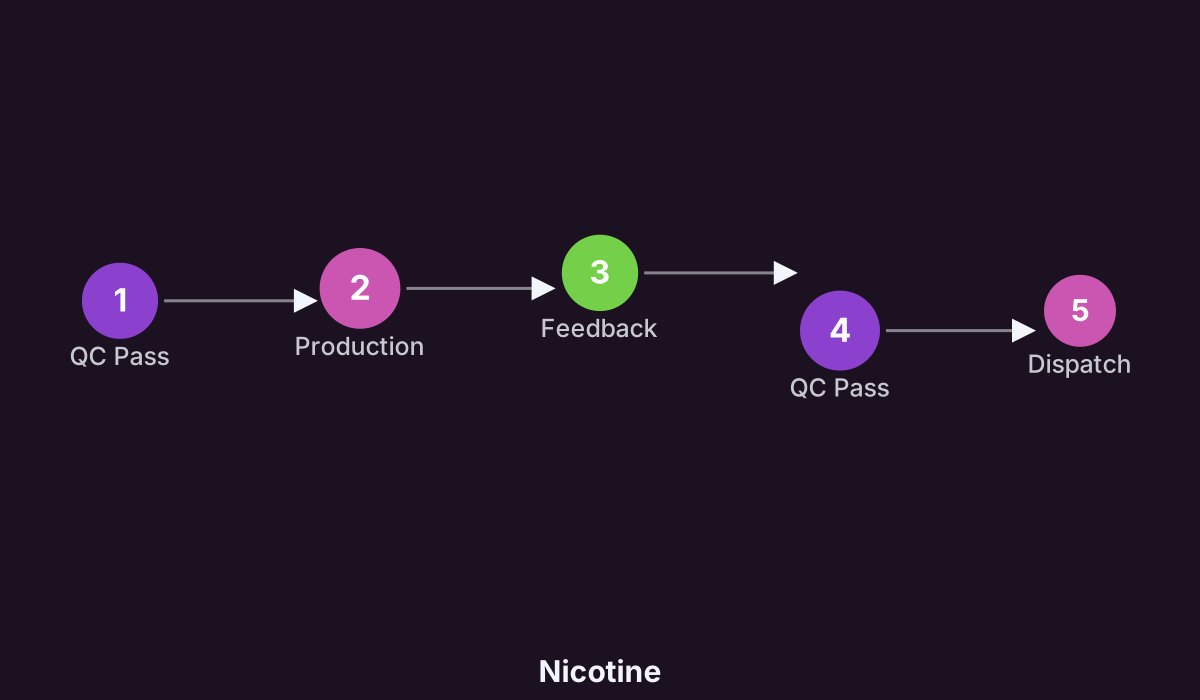
Production typically takes ten to eighteen working days after artwork approval, and transit depends on the method you choose. Air express is fastest, sea freight is cheapest at volume. We confirm both at quotation so there is no surprise later.
Next Step
If you are comparing options right now, send us the specification you have been quoted elsewhere. A side by side reading usually shows where the price difference actually comes from, and that is the most useful first conversation to have.
Related Reading
- How to Choose Nicotine Without Overpaying — North America
- Nicotine When to Add a Second Factory — Container-Scale Orders
- Seasonal Planning for Nicotine Inventory — the Buying Desk
- Negotiating Nicotine Contracts With Overseas Factories — Established Chains
- Nicotine Barcode and Labelling Requirements — Specialist Vape Shops
- Nicotine Freight Forwarder Selection Notes — Tight Margin Categories