 VapeWholesaleHub
Nicotine Reading Factory Capacity Honestly — Real Numbers Only
Buyers often ask us to explain why two nicotine samples that look identical behave differently after a month. The answer is almost always tolerance control, and it is more interesting than it sounds.
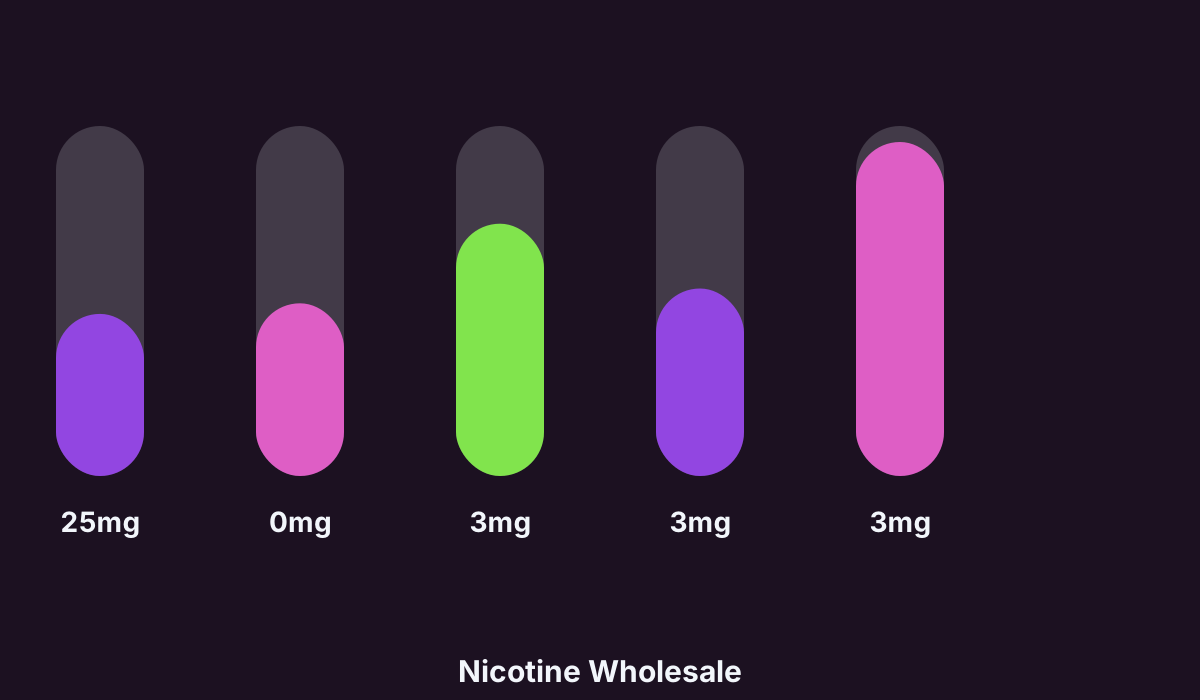
How Nicotine Fits the Assortment
Before anything else, decide which customer you are buying nicotine for. A convenience counter with limited shelf depth needs a tight range that turns quickly, while a specialist shop can carry a deeper ladder of options and educate buyers into higher ticket lines.
Pricing and Margin
When nicotine input costs move, ask which component moved. A generic price increase hides whether you are paying for cells, packaging or simply a busy production calendar.
Indicative reference points for planning purposes: entry tier from USD 2.22 per unit at 1000 units, mid tier at USD 1.32, and volume tier at USD 0.60 for full container quantities. These figures move with specification, packaging and freight, so treat them as a shape rather than a quote.
Reading a Nicotine Spec Sheet
Good nicotine specs describe the failure boundaries, not just the target. Stating what is unacceptable gives the factory a clear production window instead of a single point they will miss half the time.
| Product category | Accessory |
|---|---|
| Resistance band | 0.6 - 0.8 ohm |
| Capacity tolerance | +/- 2% |
| Puff count method | Machine cycle 3s on / 27s off |
| Master carton | 400 units |
| Carton weight | 3.7 kg |
| Shelf life | 12 months |
| Storage | 15-25 C, dry, away from direct light |
Market Signals
The nicotine category is consolidating around suppliers who can document what they ship. Buyers who built that requirement into their process early are now finding it much easier to scale.
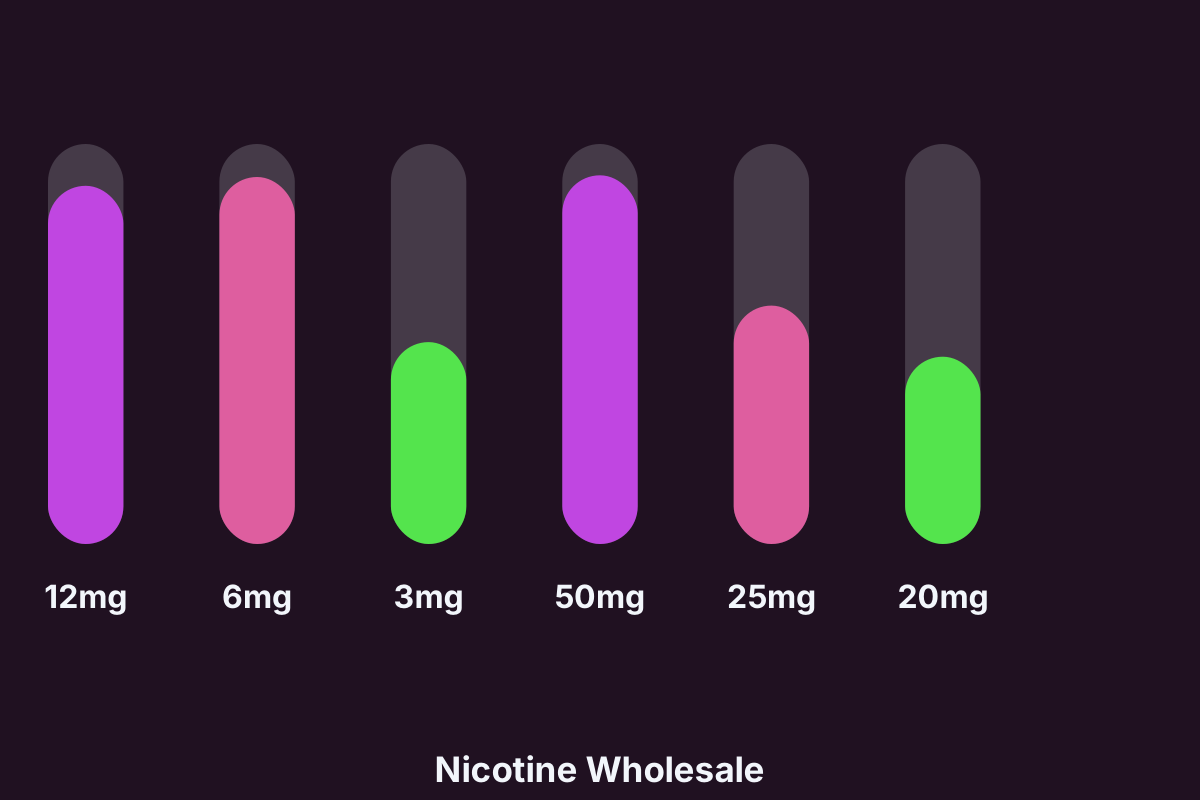
Logistics That Protect Margin
Freight is the hidden half of nicotine unit economics. A denser master carton can save more per unit than a hard negotiation on factory price, because the saving repeats on every reorder rather than once.
Consolidating nicotine with other lines is often the biggest single saving available to a mid size importer. The unit cost does not change but the landed cost does, sometimes materially.

Inspection Before Dispatch
AQL sampling gets a lot of attention, but for nicotine the more useful habit is simply measuring the same three things on every single batch. Trend lines catch problems that pass/fail checks miss.
- Rotate stock by batch code rather than by delivery date.
- Check carton dimensions against your freight quote before confirming.
- Write the complaint threshold into the order terms.
- Start with a mixed carton and let your own sell-through decide.
- Keep sealed retained samples from every production batch.
Practical Checklist
- Write the complaint threshold into the order terms.
- Start with a mixed carton and let your own sell-through decide.
- Plan the switch from air to sea freight before you need it.
- Ask how the factory measures puff count, then compare like with like.
- Agree the tolerance band in writing before approving artwork.
- Check carton dimensions against your freight quote before confirming.
Frequently Asked Questions
Do you provide compliance documents?
Every shipment leaves with the documentation set relevant to your market, including batch records and test reports where required. Your local rules still determine what you must file, so confirm those with your broker before import.
How do you handle a short shipment?
Cartons are counted and weighed before dispatch and the figures are shared with you. If something is short on arrival, the packing record and the carrier documentation are both available, which keeps the claim straightforward.
What if a batch does not match the sample?
Keep the retained samples from the approval stage. If a delivered batch measurably differs, we compare against the retained set and resolve it against the production record. This is why we insist on sealed retained units from every run.
What if I only need a small first order?
That is normal and sensible. A mixed carton lets you test nicotine in your own market before committing to a production run, and the specification you approve at that stage carries through to larger orders unchanged.
How are price changes handled on repeat orders?
{K} pricing is reviewed against input costs and volume rather than adjusted casually. Any change is confirmed in writing before the next order is scheduled, with the reason stated so you can judge it yourself.
Next Step
Start smaller than feels comfortable, measure honestly, then scale what worked. That sequence has saved more of our customers money than any negotiation tactic we could suggest.
Related Reading
- Reading a Nicotine Quotation Line by Line — 2026 Buyer Notes
- Nicotine Emissions and Leak Testing Methods — Updated for 2026
- Nicotine OEM and ODM: Which Model Fits Your Business — Before Your Next Order
- Nicotine Specification Change Control — Warehouse Teams
- Nicotine Seasonal Peaks and Stock Cover — Low Minimum Quantities
- How to Read a Nicotine Certificate of Analysis — Container-Scale Orders