 VapeWholesaleHub
Nicotine Market Demand: Reading the Numbers — 2026 Buyer Notes
Nicotine has moved from a niche listing to a category that most vape retailers simply have to carry. That popularity brought a flood of near identical offers. This guide explains how to separate a repeatable supply chain from a lucky sample.
Pricing and Margin
Build nicotine price tiers around order sizes your customers actually place. Tiers that only make sense on a spreadsheet get ignored, and you end up discounting ad hoc instead.
Hold a small nicotine buffer in your pricing model for currency movement. A few percent on a container is a real number, and it is easier to plan for than to absorb.
Indicative reference points for planning purposes: entry tier from USD 1.93 per unit at 500 units, mid tier at USD 1.29, and volume tier at USD 1.12 for full container quantities. These figures move with specification, packaging and freight, so treat them as a shape rather than a quote.
Market Signals
The most durable nicotine lines over the last few years have been unglamorous and consistent. Novelty sells once; reliability sells every month.
Merchandising and Listing Tips
Bundle nicotine with a complementary item rather than discounting it outright. The perceived value holds up better and the second item often becomes a repeat purchase on its own.
Put nicotine where the decision is made, not where the margin is highest. In most stores that means near the counter or at eye level in the category, rather than wherever there is spare space.
Logistics That Protect Margin
Ask your forwarder for the nicotine transit history on your lane, not the advertised schedule. The gap between the two is the buffer you should build into your reorder point.
Air freight makes sense for a first nicotine order when you need to test demand quickly, but almost every steady programme moves to sea freight once volumes stabilise. Planning that switch early avoids a painful margin squeeze later.
Reading a Nicotine Spec Sheet
Where possible, tie part of the nicotine payment to inspection against the written spec. It focuses attention on the numbers rather than on the relationship.
Specification sheets are where a nicotine deal is won or quietly lost. Two samples can look and taste the same while using different coil wire, different wicking density and different tolerances on the mouthpiece. Those details decide how the unit behaves in week three rather than minute three.
| Product category | Disposable |
|---|---|
| Resistance band | 1.0 - 1.2 ohm |
| Capacity tolerance | +/- 5% |
| Puff count method | Machine cycle 3s on / 27s off |
| Master carton | 300 units |
| Carton weight | 12.0 kg |
| Shelf life | 12 months |
| Storage | 15-25 C, dry, away from direct light |
How Nicotine Batches Are Checked
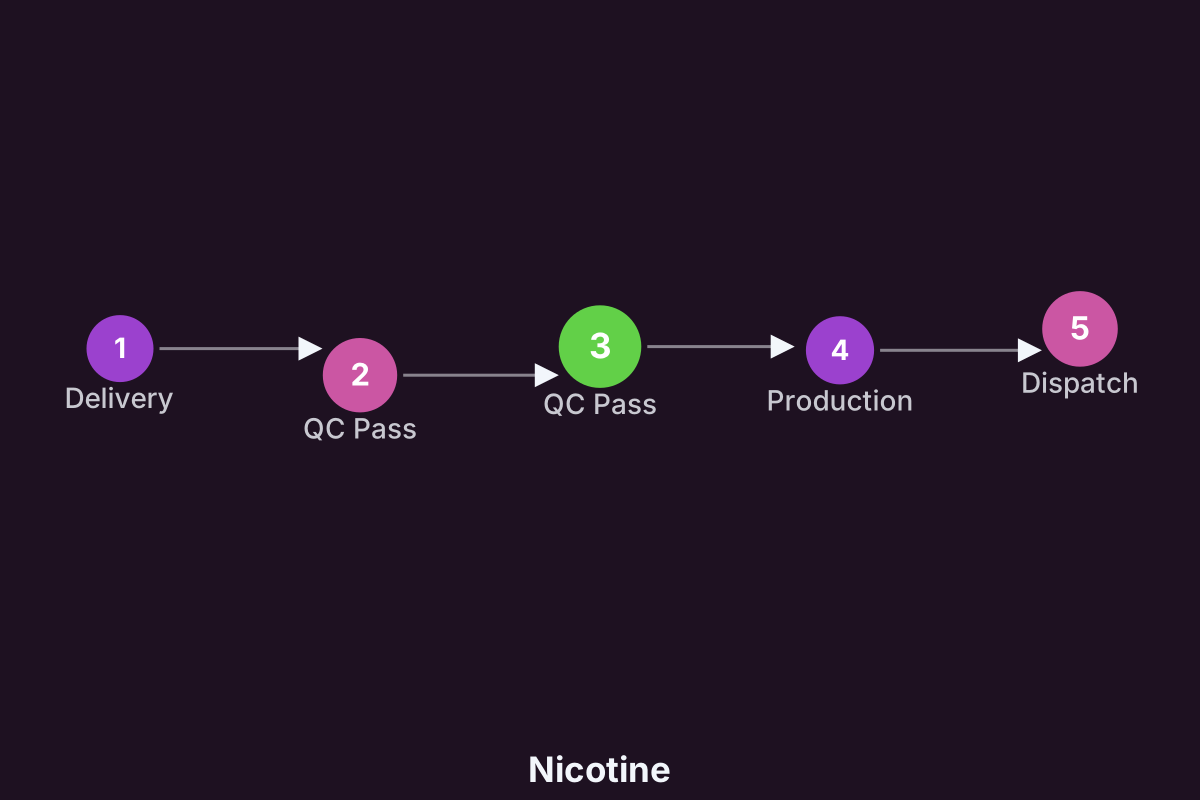
The cheapest quality control step is a retained sample. Keeping three sealed units from every nicotine batch costs almost nothing and turns any dispute into a simple comparison instead of an argument over photographs.
- Plan the switch from air to sea freight before you need it.
- Rotate stock by batch code rather than by delivery date.
- Model landed cost, not ex-works price, when comparing quotes.
- Check carton dimensions against your freight quote before confirming.
- Agree the tolerance band in writing before approving artwork.
Practical Checklist
- Rotate stock by batch code rather than by delivery date.
- Check carton dimensions against your freight quote before confirming.
- Ask how the factory measures puff count, then compare like with like.
- Confirm the current customs classification with your own broker.
- Model landed cost, not ex-works price, when comparing quotes.
- Agree the tolerance band in writing before approving artwork.
Frequently Asked Questions
What is the usual minimum order for nicotine?
For a standard production run the minimum is normally one master carton per flavour, though mixed cartons can be arranged for a first order. If you are testing the line, ask about a sample pack first and treat the freight as part of your research budget.
What if a batch does not match the sample?
Keep the retained samples from the approval stage. If a delivered batch measurably differs, we compare against the retained set and resolve it against the production record. This is why we insist on sealed retained units from every run.
What information do you need to quote?
Target specification, approximate quantity, destination and any packaging requirement. With those four we can usually come back with a costed option the same working day rather than a request for more information.
Can I visit the production facility?
Yes, and we encourage it for larger programmes. Visits are most useful when you already have a draft specification, because you can then check the specific processes behind the numbers you care about.
Next Step
If you take one thing from this page, take the retained sample habit. It costs a few units per batch and it is the difference between a disagreement and a decision.
Related Reading
- Nicotine Returns Data and What It Is Telling You — Private Label Programmes
- Nicotine Reading Factory Capacity Honestly — Convenience Retail
- Nicotine Handling Product Recalls Professionally — Small Batch Buyers
- Nicotine Compliance Basics for Importers — Freight Included
- Nicotine Coil Wire and Wicking Choices Compared — Wholesale Clubs
- Nicotine Age Verification at the Point of Sale — Container-Scale Orders