 VapeWholesaleHub
Nicotine Freight Forwarder Selection Notes — Cross-Border Trade
If you are comparing nicotine suppliers right now, you are probably looking at three quotes that look identical and cost very different amounts. That gap usually comes down to cell grade, coil consistency and how honest the factory is about tolerances. Let us unpack it.
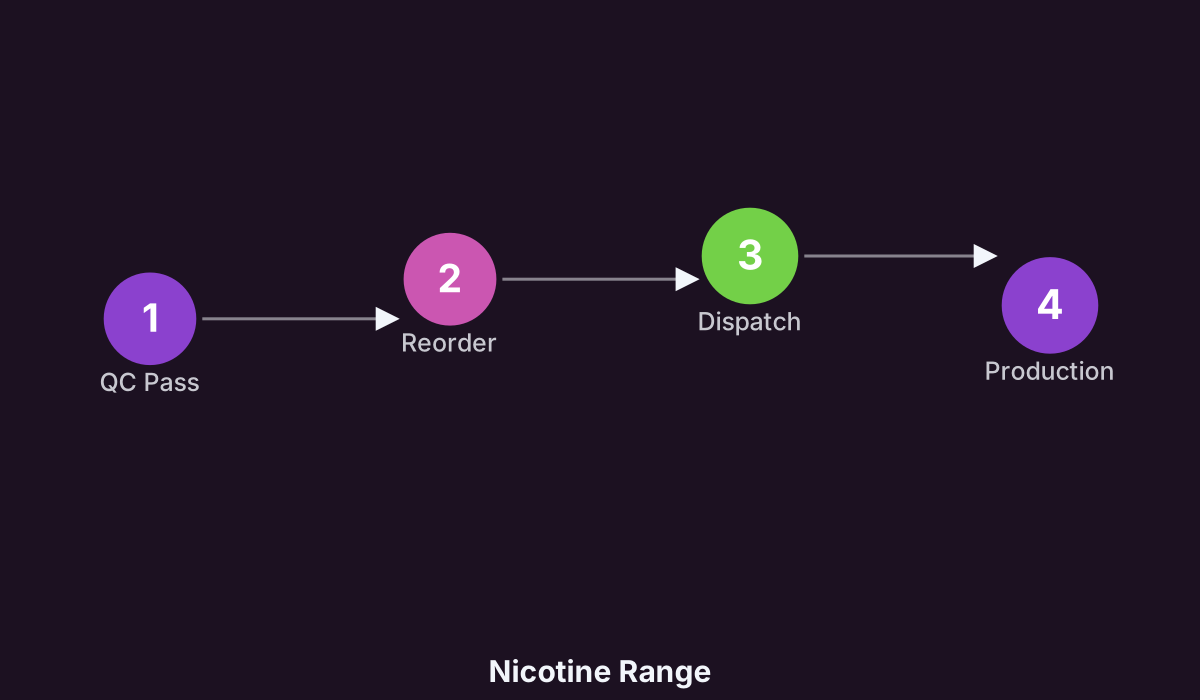
Pricing and Margin
Margin on nicotine is rarely lost at the till. It is lost through dead stock, returns and emergency air freight. A slightly higher landed cost with predictable lead time usually beats the cheapest quote on the spreadsheet.
Indicative reference points for planning purposes: entry tier from USD 1.06 per unit at 2000 units, mid tier at USD 1.63, and volume tier at USD 1.09 for full container quantities. These figures move with specification, packaging and freight, so treat them as a shape rather than a quote.
Market Signals
Flavour cycles in nicotine are shortening, which argues for smaller test orders and faster feedback loops rather than large speculative buys on a predicted winner.
The most durable nicotine lines over the last few years have been unglamorous and consistent. Novelty sells once; reliability sells every month.
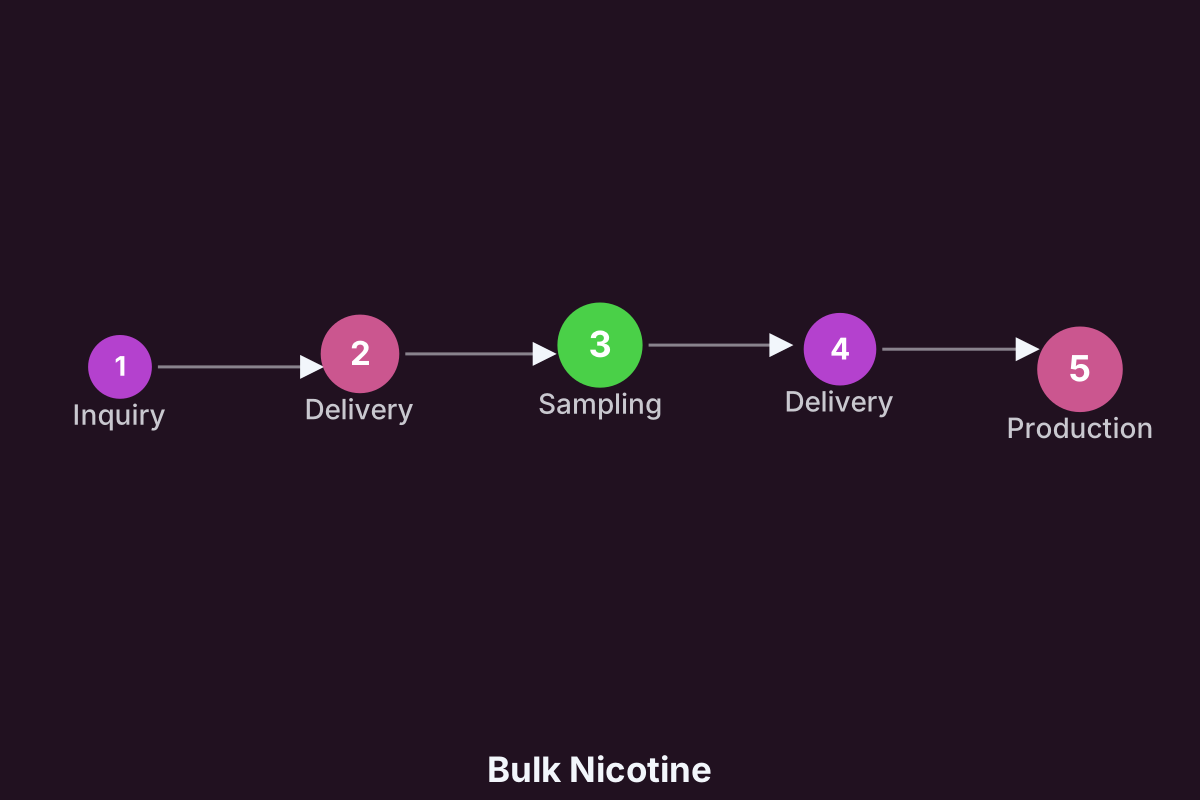
Inspection Before Dispatch
Incoming inspection for nicotine is not about opening boxes at random. We weigh a sample of cartons, check batch codes against the production record, run a draw resistance measurement, and log the results so that a complaint three months later can be traced to a specific run.
Random checks are fine, but weight the sample towards the start and end of a nicotine production run. Those are where a line is most likely to drift.
- Model landed cost, not ex-works price, when comparing quotes.
- Agree the tolerance band in writing before approving artwork.
- Rotate stock by batch code rather than by delivery date.
- Confirm the current customs classification with your own broker.
- Keep sealed retained samples from every production batch.
The Specification That Matters
When we write a nicotine specification with a distributor, we fix four things first: the resistance band, the liquid capacity tolerance, the puff count methodology and the packaging master carton. Everything else can flex without changing the customer experience.
Pay attention to how a nicotine supplier responds when you ask for a tolerance they do not want to commit to. The hesitation is usually more informative than the eventual answer.
| Product category | Open system |
|---|---|
| Resistance band | 0.8 - 1.0 ohm |
| Capacity tolerance | +/- 3% |
| Puff count method | Declared by capacity |
| Master carton | 300 units |
| Carton weight | 3.5 kg |
| Shelf life | 18 months |
| Storage | 15-25 C, dry, away from direct light |
Logistics That Protect Margin
Model nicotine freight both ways before choosing a method: cost per unit and cost per week of delay. The second figure is the one that decides whether a cheap option was actually cheap.
Carton dimensions for nicotine are a design decision, not a packing afterthought. A few centimetres on the master carton can change how many units fit a pallet, and that repeats on every order.
Practical Checklist
- Write the complaint threshold into the order terms.
- Start with a mixed carton and let your own sell-through decide.
- Confirm the current customs classification with your own broker.
- Keep sealed retained samples from every production batch.
- Plan the switch from air to sea freight before you need it.
- Check carton dimensions against your freight quote before confirming.
Frequently Asked Questions
What if a batch does not match the sample?
Keep the retained samples from the approval stage. If a delivered batch measurably differs, we compare against the retained set and resolve it against the production record. This is why we insist on sealed retained units from every run.
What is the usual minimum order for nicotine?
For a standard production run the minimum is normally one master carton per flavour, though mixed cartons can be arranged for a first order. If you are testing the line, ask about a sample pack first and treat the freight as part of your research budget.
How should nicotine be stored?
Cool, dry and out of direct sunlight. Heat and light are the two things that shorten shelf life fastest. Rotate stock by batch code rather than by arrival date, and keep cartons off concrete floors in humid warehouses.
What if I only need a small first order?
That is normal and sensible. A mixed carton lets you test nicotine in your own market before committing to a production run, and the specification you approve at that stage carries through to larger orders unchanged.
Next Step
Start smaller than feels comfortable, measure honestly, then scale what worked. That sequence has saved more of our customers money than any negotiation tactic we could suggest.
Related Reading
- Nicotine Humidity Control in Coastal Warehouses — Warehouse Teams
- Nicotine Contract Clauses Worth Negotiating — Private Label Programmes
- Nicotine Inventory Turnover Benchmarks for Stores — Specialist Vape Shops
- Nicotine Vendor Managed Inventory Possibilities — Real Numbers Only
- How to Read a Nicotine Certificate of Analysis — the Middle East
- Nicotine Packaging Refresh Without Losing Recognition — UK and Ireland