 VapeWholesaleHub
Nicotine First Order Playbook for New Importers — a Factory Floor View
Retailers rarely lose money on nicotine because of price. They lose money because the first container was bought on a photograph. This page walks through what actually matters when you source nicotine at scale, written from the buying desk rather than the marketing department.
Logistics That Protect Margin
Track nicotine landed cost per unit as a running number, including duty and local delivery. It is the only figure that tells you whether a supplier change actually improved anything.
Freight is the hidden half of nicotine unit economics. A denser master carton can save more per unit than a hard negotiation on factory price, because the saving repeats on every reorder rather than once.
Turning Nicotine Into Repeats
On shelf, nicotine sells on clarity. A plain shelf talker that states strength and flavour in two words outperforms a beautifully designed but vague display, because most purchase decisions here take under ten seconds.
Rotate nicotine facing rather than price for the first month. Visibility changes sell-through more reliably than a small discount, and it does not train customers to wait for offers.
How Nicotine Fits the Assortment
Before anything else, decide which customer you are buying nicotine for. A convenience counter with limited shelf depth needs a tight range that turns quickly, while a specialist shop can carry a deeper ladder of options and educate buyers into higher ticket lines.
One useful exercise: list every nicotine line you stock and mark the last date each one sold at full price. Anything without a recent full price sale is taking space from something that would use it better.
Where Demand Is Heading
One shift worth planning for: shorter nicotine reorder cycles with smaller average drops. It favours suppliers with flexible production slots over those who only want large annual commitments.
Traceability is moving from a nice-to-have to a requirement in several nicotine markets. Building the habit now is cheaper than retrofitting record keeping under pressure later.
What Nicotine Really Costs Landed
Tiered pricing works best when the tiers match real customer behaviour. Most nicotine buyers will take the second tier if the step is modest and the third tier only if they can see a genuine reason to hold more stock.
Build nicotine price tiers around order sizes your customers actually place. Tiers that only make sense on a spreadsheet get ignored, and you end up discounting ad hoc instead.
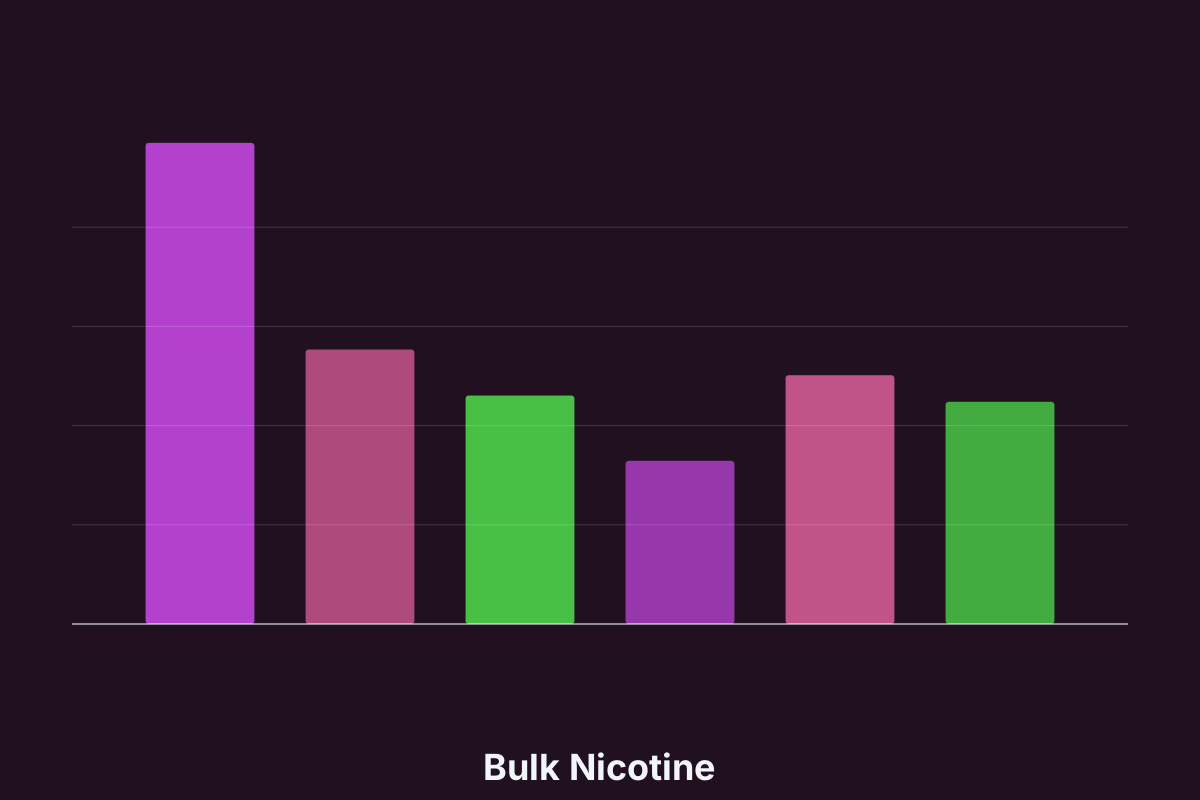
Indicative reference points for planning purposes: entry tier from USD 1.74 per unit at 2000 units, mid tier at USD 0.98, and volume tier at USD 1.07 for full container quantities. These figures move with specification, packaging and freight, so treat them as a shape rather than a quote.
What to Fix Before Approving Nicotine
Where possible, tie part of the nicotine payment to inspection against the written spec. It focuses attention on the numbers rather than on the relationship.
Ask any factory for the same nicotine sample twice, three months apart. If the second sample drifts, the production line is running without statistical control and your reviews will drift with it. Consistency over time is a more useful signal than a single good sample.
| Product category | Pod system |
|---|---|
| Resistance band | 0.6 - 0.8 ohm |
| Capacity tolerance | +/- 3% |
| Puff count method | Machine cycle 2s on / 18s off |
| Master carton | 300 units |
| Carton weight | 10.6 kg |
| Shelf life | 18 months |
| Storage | 15-25 C, dry, away from direct light |
Practical Checklist
- Plan the switch from air to sea freight before you need it.
- Write the complaint threshold into the order terms.
- Confirm the current customs classification with your own broker.
- Ask how the factory measures puff count, then compare like with like.
- Rotate stock by batch code rather than by delivery date.
- Check carton dimensions against your freight quote before confirming.
Frequently Asked Questions
Do you hold stock for regular customers?
For established programmes we can reserve production slots and, in some cases, hold finished nicotine stock against a forecast. It removes most of the lead time risk from a reorder and is worth discussing once volumes are stable.
Can I mix strengths in one order?
In most cases yes, as long as each strength meets the minimum run length. Mixed strength cartons are popular with retailers building their first display because they show the full ladder without over committing.
Can you match an existing product I already sell?
Often yes, provided we can measure it properly. Send a physical sample and we will report back on what can be matched, what will differ slightly, and why. An honest gap is more useful than a vague promise.
How do you handle a short shipment?
Cartons are counted and weighed before dispatch and the figures are shared with you. If something is short on arrival, the packing record and the carrier documentation are both available, which keeps the claim straightforward.
What is the usual minimum order for nicotine?
For a standard production run the minimum is normally one master carton per flavour, though mixed cartons can be arranged for a first order. If you are testing the line, ask about a sample pack first and treat the freight as part of your research budget.
Next Step
Whatever you decide, decide it against numbers you can check on arrival. That single discipline removes most of the risk from importing nicotine.
Related Reading
- Comparing Nicotine Factory Tiers and What You Get — the Buying Desk
- Nicotine Age Verification at the Point of Sale — Private Label Programmes
- Nicotine Returns Data and What It Is Telling You — North America
- Nicotine Clearance Strategies That Protect Margin — North America
- Nicotine Warranty and After Sales: Setting Expectations — Specialist Vape Shops
- Nicotine Staff Training Notes for Store Teams — Plain Language