 VapeWholesaleHub
Nicotine Buyer FAQ for First Time Importers — 2026 Buyer Notes
Buying nicotine wholesale is a logistics problem disguised as a product problem. The unit is small, the margin depends on freight density, and the failure mode shows up weeks after delivery. The notes below come from real orders we have shipped.
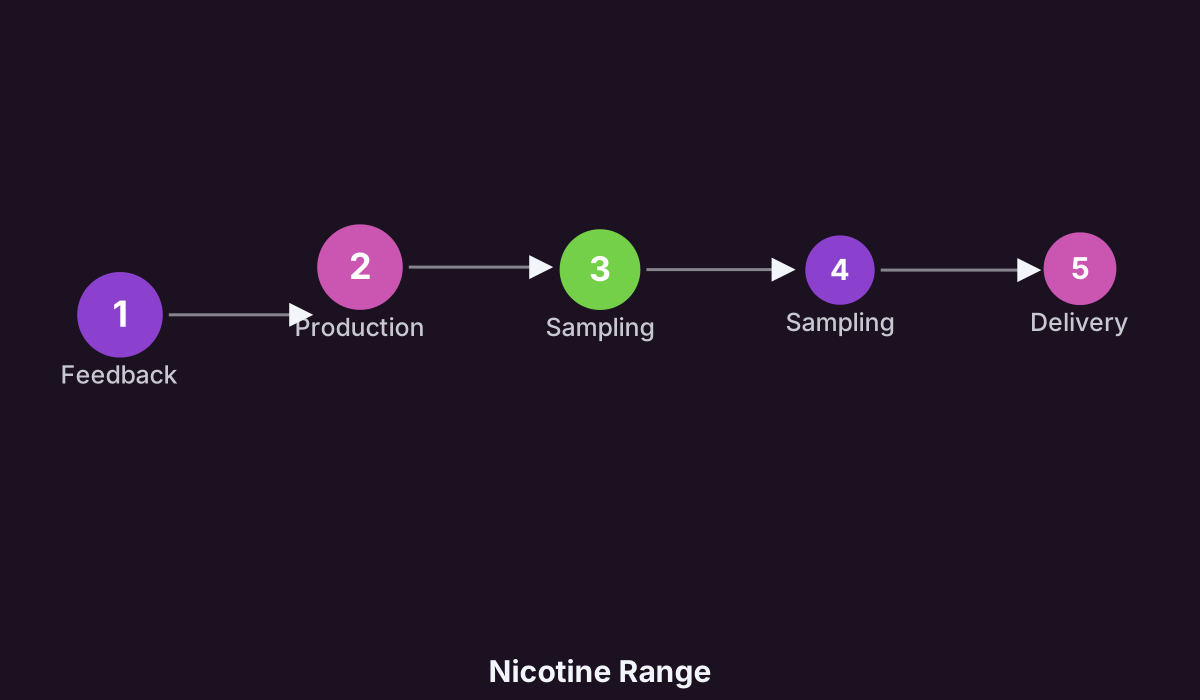
Trends Worth Watching
Assortment rationalisation is the quiet trend in this category. Shops that cut their nicotine range from twelve lines to five well chosen ones often report higher total sales, not lower.
Flavour cycles in nicotine are shortening, which argues for smaller test orders and faster feedback loops rather than large speculative buys on a predicted winner.
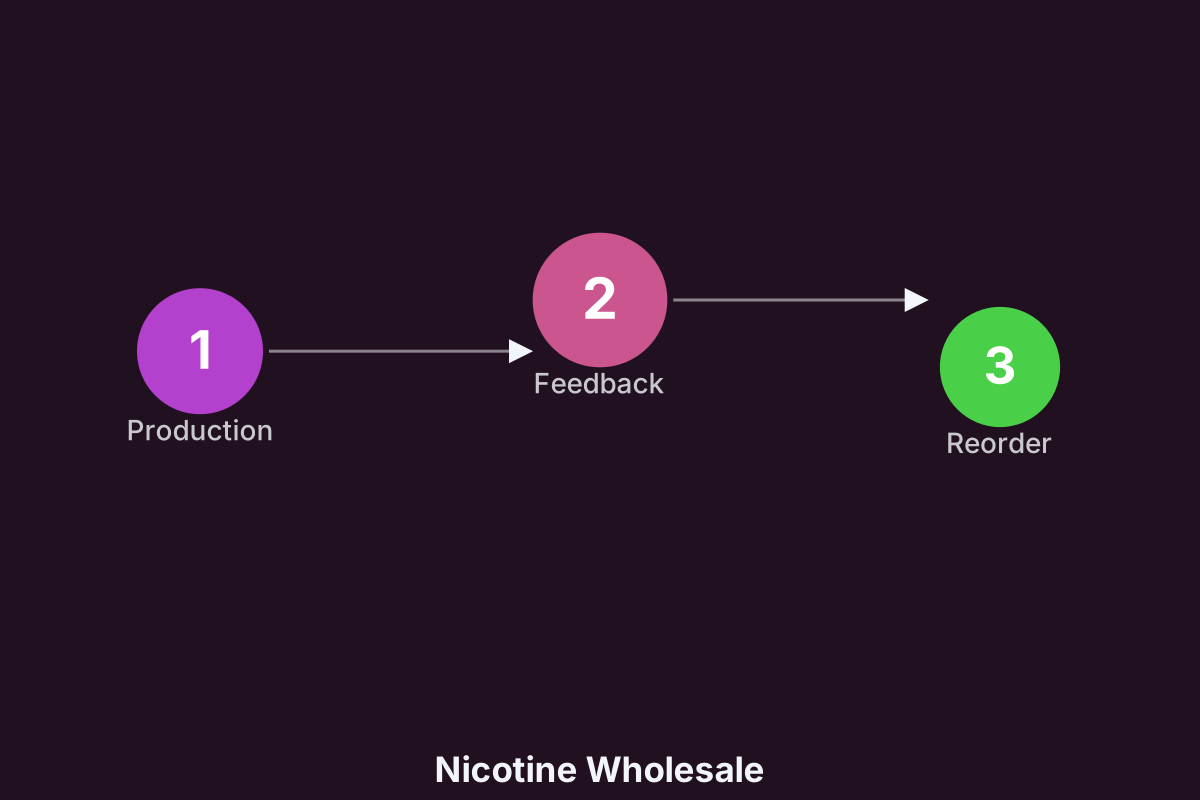
Merchandising and Listing Tips
On shelf, nicotine sells on clarity. A plain shelf talker that states strength and flavour in two words outperforms a beautifully designed but vague display, because most purchase decisions here take under ten seconds.
What to Fix Before Approving Nicotine
Two specifications that matter more than buyers expect: the seal integrity after a drop test and the consistency of the draw from first use to last. Both are measurable before you commit to volume.
Where possible, tie part of the nicotine payment to inspection against the written spec. It focuses attention on the numbers rather than on the relationship.
| Product category | Closed pod |
|---|---|
| Resistance band | 1.2 - 1.4 ohm |
| Capacity tolerance | +/- 2% |
| Puff count method | Declared by capacity |
| Master carton | 200 units |
| Carton weight | 11.0 kg |
| Shelf life | 18 months |
| Storage | 15-25 C, dry, away from direct light |
Positioning Nicotine on Your Shelf
Decide early whether nicotine is a traffic driver or a margin line in your store. The answer changes how you price it, where you place it and how hard you push it at the counter.
A tight nicotine range with deep availability usually outsells a wide range with thin stock. Customers who find their line in stock come back; customers who are told to wait do not.
Pricing and Margin
Build nicotine price tiers around order sizes your customers actually place. Tiers that only make sense on a spreadsheet get ignored, and you end up discounting ad hoc instead.
Indicative reference points for planning purposes: entry tier from USD 1.38 per unit at 1000 units, mid tier at USD 0.95, and volume tier at USD 1.26 for full container quantities. These figures move with specification, packaging and freight, so treat them as a shape rather than a quote.
Practical Checklist
- Confirm the current customs classification with your own broker.
- Check carton dimensions against your freight quote before confirming.
- Keep sealed retained samples from every production batch.
- Start with a mixed carton and let your own sell-through decide.
- Plan the switch from air to sea freight before you need it.
- Ask how the factory measures puff count, then compare like with like.
Frequently Asked Questions
What if I only need a small first order?
That is normal and sensible. A mixed carton lets you test nicotine in your own market before committing to a production run, and the specification you approve at that stage carries through to larger orders unchanged.
What information do you need to quote?
Target specification, approximate quantity, destination and any packaging requirement. With those four we can usually come back with a costed option the same working day rather than a request for more information.
What is the usual minimum order for nicotine?
For a standard production run the minimum is normally one master carton per flavour, though mixed cartons can be arranged for a first order. If you are testing the line, ask about a sample pack first and treat the freight as part of your research budget.
Do you provide compliance documents?
Every shipment leaves with the documentation set relevant to your market, including batch records and test reports where required. Your local rules still determine what you must file, so confirm those with your broker before import.
Next Step
Nobody wins when a first order is too large to learn from. Start with a mixed carton, check how it moves in your own market, then scale the lines that earned the shelf space.
Related Reading
- Nicotine Cross Selling With Adjacent Categories — North America
- Warehouse Layout Tips for Nicotine Distributors — a Printable Checklist
- Nicotine Warranty Claims Workflow — Specialist Vape Shops
- Nicotine Cost Breakdown: What You Are Really Paying For — Three Price Tiers
- Nicotine Clearance Strategies That Protect Margin — Plain Language
- Nicotine Returns Data and What It Is Telling You — the Buying Desk