 VapeWholesaleHub
Nicotine Barcode and Labelling Requirements — Online Sellers
We ship nicotine to distributors in very different markets, and the same five questions come up almost every week. Rather than answer them in email each time, we have written them out properly here.

Freight, Customs and Timing
Customs classification for nicotine varies by market and changes from time to time. We ship with full documentation, but your broker should confirm the current code before your first order rather than after it lands.
Quality Control in Practice
The cheapest quality control step is a retained sample. Keeping three sealed units from every nicotine batch costs almost nothing and turns any dispute into a simple comparison instead of an argument over photographs.
- Agree the tolerance band in writing before approving artwork.
- Rotate stock by batch code rather than by delivery date.
- Check carton dimensions against your freight quote before confirming.
- Model landed cost, not ex-works price, when comparing quotes.
- Keep sealed retained samples from every production batch.
Modelling a Healthy Margin
Tiered pricing works best when the tiers match real customer behaviour. Most nicotine buyers will take the second tier if the step is modest and the third tier only if they can see a genuine reason to hold more stock.
When nicotine input costs move, ask which component moved. A generic price increase hides whether you are paying for cells, packaging or simply a busy production calendar.
Indicative reference points for planning purposes: entry tier from USD 1.61 per unit at 1000 units, mid tier at USD 1.26, and volume tier at USD 0.53 for full container quantities. These figures move with specification, packaging and freight, so treat them as a shape rather than a quote.
Market Signals
The nicotine category is consolidating around suppliers who can document what they ship. Buyers who built that requirement into their process early are now finding it much easier to scale.
One visible change in nicotine is the move towards clearer labelling and traceability. Retailers who adopted batch coding early are finding it much easier to work with larger distributors now.

What to Fix Before Approving Nicotine
Two specifications that matter more than buyers expect: the seal integrity after a drop test and the consistency of the draw from first use to last. Both are measurable before you commit to volume.
Where possible, tie part of the nicotine payment to inspection against the written spec. It focuses attention on the numbers rather than on the relationship.
| Product category | Disposable |
|---|---|
| Resistance band | 1.2 - 1.4 ohm |
| Capacity tolerance | +/- 2% |
| Puff count method | Machine cycle 2s on / 18s off |
| Master carton | 300 units |
| Carton weight | 8.0 kg |
| Shelf life | 12 months |
| Storage | 15-25 C, dry, away from direct light |
Where Nicotine Sits in the Range
Range decisions for nicotine should start from shelf space, not from a supplier catalogue. Count the facings you actually have, then decide how many of them this line deserves against what it currently earns.
Nicotine rewards retailers who can explain it in one sentence. If your team needs a paragraph, the range is too complicated for the space it occupies.
Practical Checklist
- Ask how the factory measures puff count, then compare like with like.
- Write the complaint threshold into the order terms.
- Rotate stock by batch code rather than by delivery date.
- Check carton dimensions against your freight quote before confirming.
- Keep sealed retained samples from every production batch.
- Agree the tolerance band in writing before approving artwork.
Frequently Asked Questions
How are price changes handled on repeat orders?
{K} pricing is reviewed against input costs and volume rather than adjusted casually. Any change is confirmed in writing before the next order is scheduled, with the reason stated so you can judge it yourself.
Do you hold stock for regular customers?
For established programmes we can reserve production slots and, in some cases, hold finished nicotine stock against a forecast. It removes most of the lead time risk from a reorder and is worth discussing once volumes are stable.
Do you provide compliance documents?
Every shipment leaves with the documentation set relevant to your market, including batch records and test reports where required. Your local rules still determine what you must file, so confirm those with your broker before import.
What happens if my market changes its rules?
Regulations move, and packaging or documentation sometimes has to follow. We keep approved artwork files on hand so that a required change is a reprint rather than a redesign, which keeps the cost and delay down.
Can I mix strengths in one order?
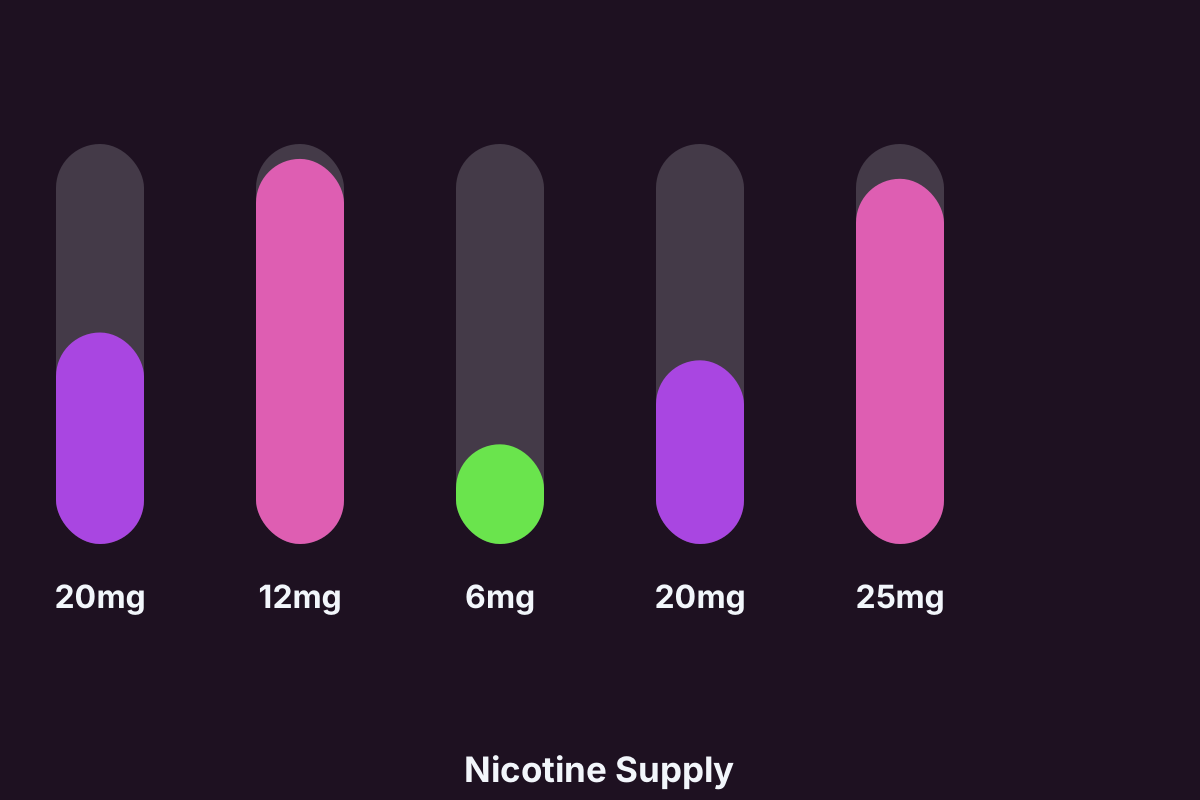
In most cases yes, as long as each strength meets the minimum run length. Mixed strength cartons are popular with retailers building their first display because they show the full ladder without over committing.
Next Step
If you take one thing from this page, take the retained sample habit. It costs a few units per batch and it is the difference between a disagreement and a decision.
Related Reading
- Nicotine Last Mile Delivery for Local Retailers — Warehouse Teams
- Reducing Returns on Nicotine Through Better Specs — UK and Ireland
- Seasonal Planning for Nicotine Inventory — Plain Language
- Nicotine Loyalty Effects in Repeat Categories — Southeast Asia
- Nicotine Artwork and Dieline Essentials — New Distributors
- Nicotine Compliance Basics for Importers — New Distributors